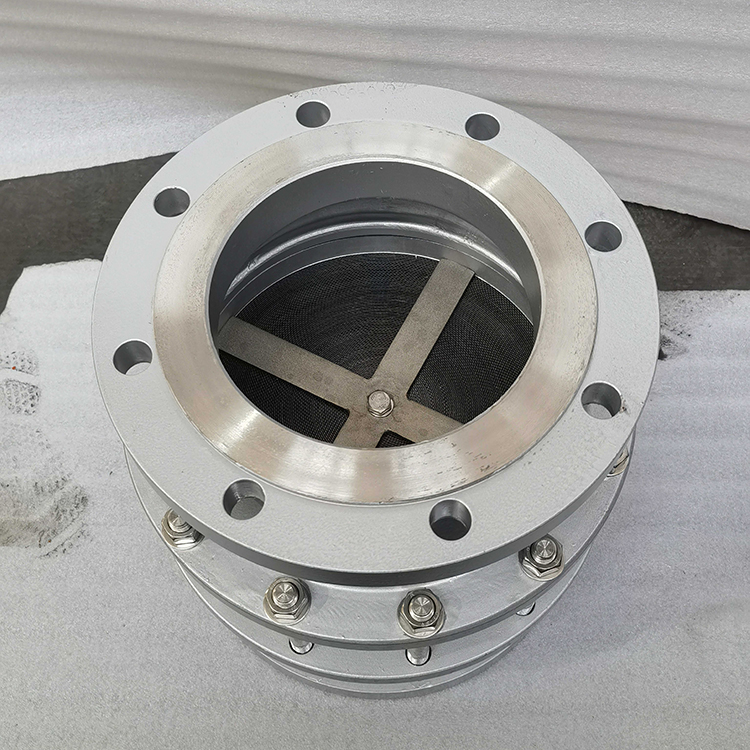
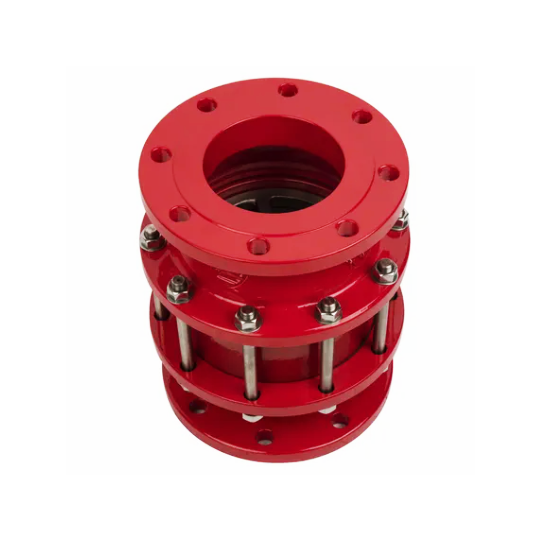
Producdt Description:
The core safety function of the ZCZHQ-II is delivered by its internal flame elements, which quench flames by rapidly absorbing and dissipating thermal energy. We offer two primary types of internal filtration technology to meet your specific operational safety standards:
-
Corrugated Filter Element: This high-efficiency flame element is supported by a matrix of stainless steel, copper-nickel alloy, aluminium, or aluminium alloy. It is specifically engineered to prevent the fierce flames of deflagration and can withstand intense mechanical and thermal effects. Its unique corrugated structure ensures that flow resistance is small, while the component remains easy to clean and replace during routine maintenance.
-
Metal Mesh Filter Element: This specialized flame element is composed of overlapping layers of stainless steel or copper mesh with wire diameters ranging from 0.23 mm to 0.315 mm. Following standard safety protocols in China, these elements usually utilize 16–22 mesh metal screens arranged in 4–12 layers to provide a dense, fire-quenching path for hazardous vapors.
Installation:
- Remove all flange cover and discard all packaging materials.
- Check the seat, the matching flange gasket on the seat surface. It must be clean, flat, scratch-free, corrosion-resistant, tool traces.
- Check the gasket to ensure that the material is suitable forapplication.
- Lubricate all studs and nuts with proper thread lubricant. If the fastener is a high temperature stainless steel material, a back-grabbing compound, such as molybdenum disulfide, is used.
- Inside gasket of bolt ring.
- Installing flange of Inline flame arrester shell to butt with flange of pipeline, attention should be paid to the position of lifting handle and top nut of In line flame arrester element to facilitate the removal of In line flame arrester elements in the future.
Note:
Under normal circumstances, (fire) breathing valve operating pressure to B shall prevail;
Applicable materials: gasoline, kerosene, diesel, aromatics, sulfur, air and other petrochemical materials;
Environment temperature: -40 °C -+60 °C;
Shell material: HT, AL, A3, 18-8, 304, 304L, 316, 316L.
Flange standards: HG20592-97 PN1.0 (also can be produced according to user specified criteria)
“Protect Your Infrastructure with Certified Explosion Protection. Request a Technical Quote for the ZCZHQ-II Today.”
Technical Safety & Performance FAQ
Q1: How does the ZCZHQ-II “quench” a flame?
A1: The internal flame element acts as a heat sink. As the flame attempts to pass through the narrow channels of the corrugated matrix, the thermal energy is rapidly absorbed by the metal, cooling the gas below its ignition point and extinguishing the fire.
Q2: Can the ZCZHQ-II be installed in any orientation?
A2: Yes. The ZCZHQ-II is a bi-directional flame arrester, meaning it can stop flames from either direction, providing flexibility for horizontal or vertical piping runs.
Q3: What is the difference between this and a detonation arrester?
A3: The ZCZHQ-II is an explosion-proof type optimized for deflagrations (subsonic flames). For high-speed supersonic shockwaves, a dedicated detonation flame arrester like the ZCGZJII-H is required.
Q4: Is the flame element replaceable?
A4: Absolutely. We provide standalone flame elements that can be easily swapped into the ZCZHQ-II housing, making maintenance cost-effective and straightforward.
Q5: Which material is best for chemical processing plants?
A5: For facilities handling aggressive chemical vapors, we highly recommend the Overall 304 or 316L Stainless Steel configuration for its superior corrosion resistance and longevity.