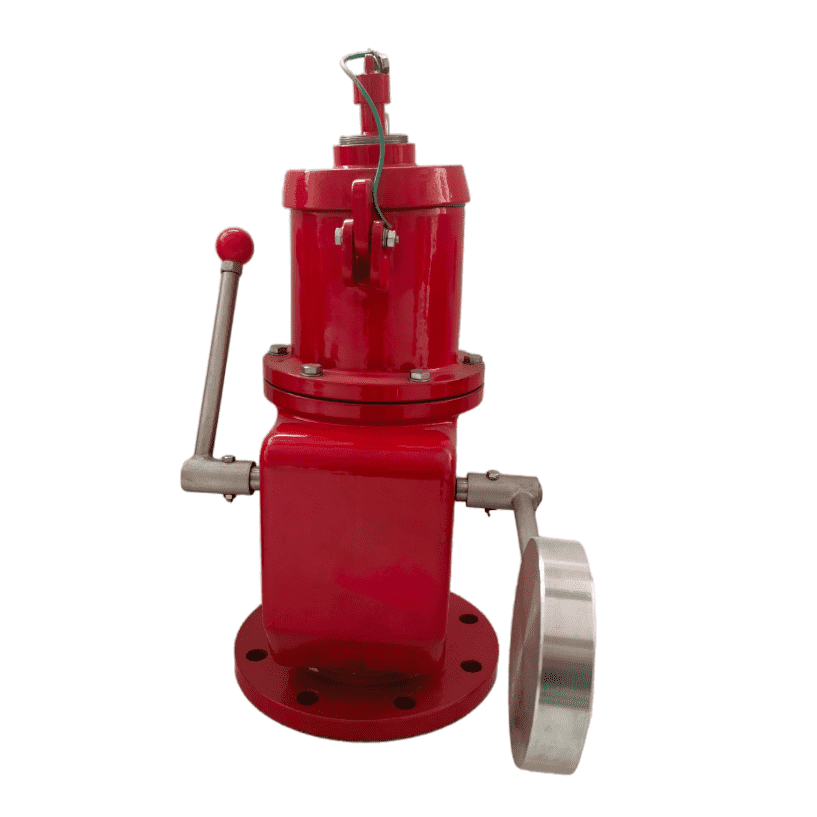
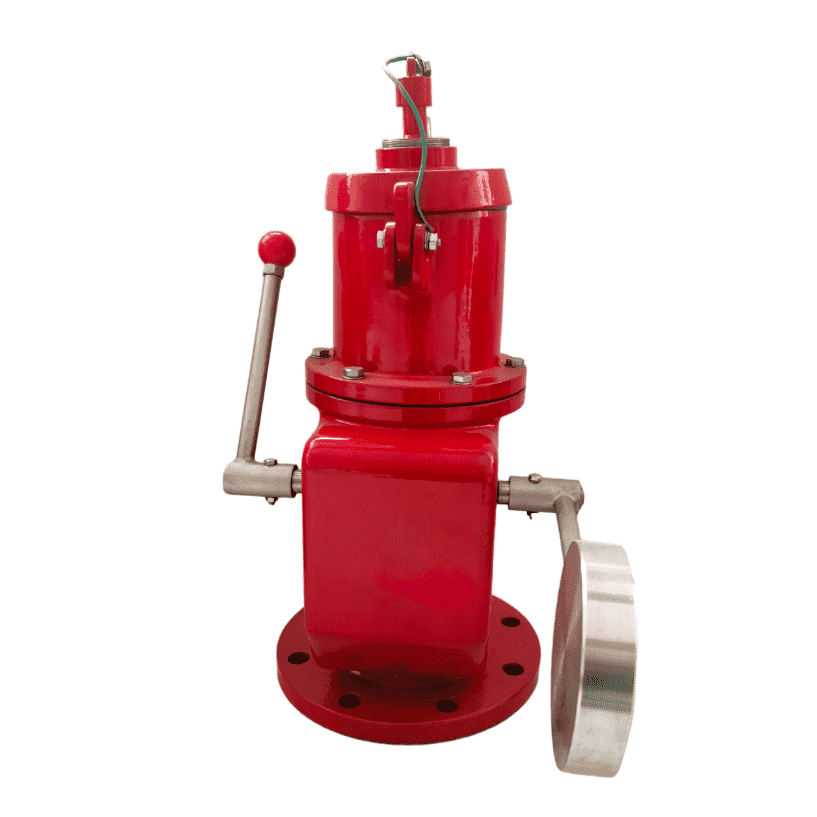
Producdt Description:
The Environmentally Type Sampling Hatch is a high-precision gauge hatch engineered to meet the stringent emission standards of the modern global oil and gas industry. While a traditional gauge hatch may allow hazardous vapors to escape during use, this model utilizes a specialized, fully enclosed mechanism designed to eliminate the release of Volatile Organic Compounds (VOCs) during manual tank operations. It is the premier gauge hatch choice for facilities striving for zero-emission targets and superior operator safety.
Note:
Under normal circumstances, (fire) breathing valve operating pressure to B shall prevail;
Applicable materials: gasoline, kerosene, diesel, aromatics, sulfur, air and other petrochemical materials;
Environment temperature: -40 °C -+60 °C;
Shell material: HT, AL, A3, 18-8, 304, 304L, 316, 316L.
Flange standards: HG20592-97 PN1.0 (also can be produced according to user specified criteria)
“Achieve Zero Emissions Today. Request a Technical Quote for Our Environmental Hatch.”
Meeting Emission Standards with Zero-Leakage Hatches
Q1: What makes this sampling hatch “environmentally friendly”?
A1: Its primary feature is a fully enclosed mechanism that prevents Volatile Organic Compounds (VOCs) from leaking during tank sampling, which is critical for meeting modern air quality standards.
Q2: Does it support manual dipping and level measurement?
A2: Yes. The hatch is designed to allow technicians to perform essential tasks like sampling, dipping, and sensing without breaking the vapor seal of the tank.
Q3: Is this hatch compatible with pressurized storage tanks?
A3: It is specifically engineered for low-pressure and atmospheric tanks where vapor containment is a priority. Please provide your tank’s pressure rating for a detailed compatibility check.
Q4: How does it improve operator safety compared to standard gauge hatches?
A4: By keeping the tank vapors contained, it prevents operators from inhaling toxic fumes or being exposed to flammable gases during routine maintenance.
Q5: What materials are used for the sealing components?
A5: We use high-performance, chemical-resistant gaskets (such as PTFE or Viton) to ensure an airtight seal even when handling aggressive media.