Producdt Description
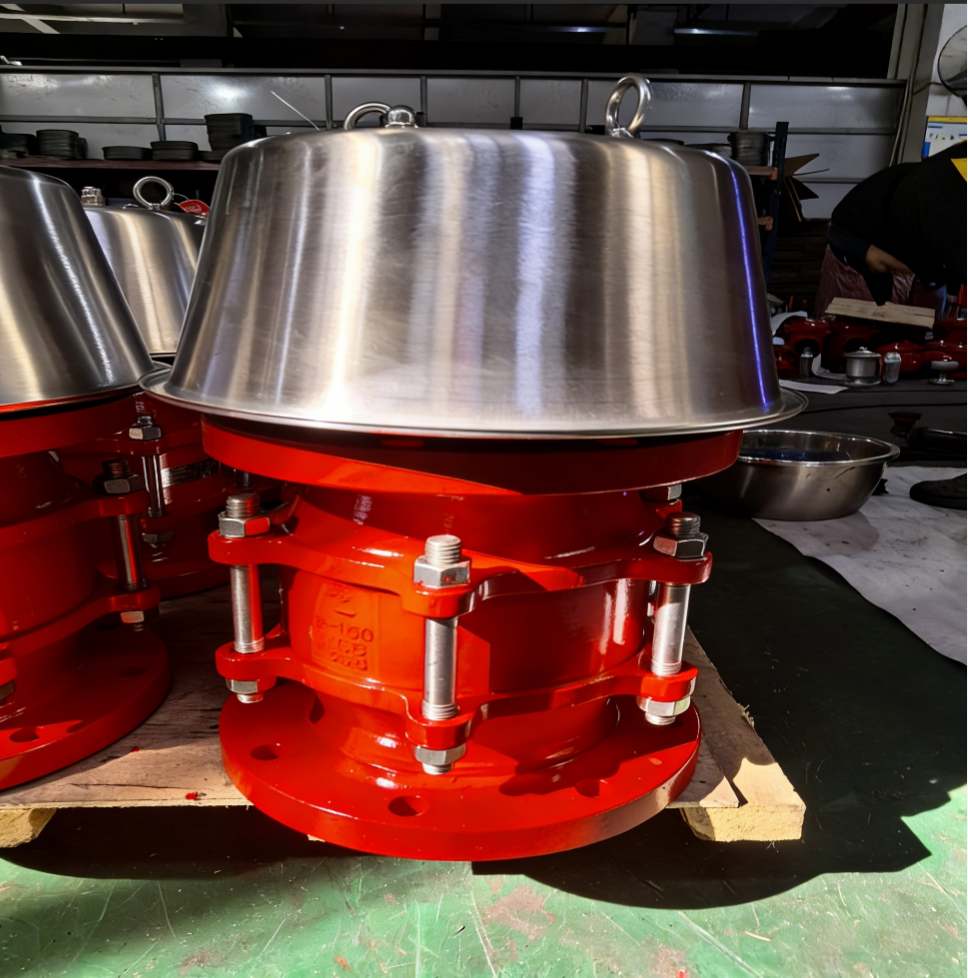
At its core, a high-quality flame arrester is all about precision engineering, consisting primarily of a robust shell and a specialized fire element. We offer two industry-standard configurations to meet your safety needs: metal mesh and corrugated designs. Our metal mesh elements utilize overlapping layers of stainless steel or copper (0.23–0.315 mm in diameter). For most domestic projects, we find that a 16–22 mesh with 4–12 layers provides the optimal balance of safety and airflow for a standard flame arrester.
However, for more demanding environments, the corrugated filter element is the preferred choice. Supported by materials like stainless steel, copper-nickel, or aluminum alloy, this corrugated design is a powerhouse. It doesn’t just act as a flame arrester; it’s built to stop fierce deflagration flames while withstanding intense mechanical and thermal stress.
What makes this system truly effective—especially when paired with a Ventilation Cap at the end of a line—is the low flow resistance. This ensures your tank breathes easily under the Ventilation Cap while the flame arrester stands guard inside, ready to extinguish any ignition source. Plus, the design is intentionally simple to clean and replace, so your maintenance team won’t have to deal with unnecessary downtime.
Installation:
- Remove all flange cover and discard all packaging materials.
- Check the seat, the matching flange gasket on the seat surface. It must be clean, flat, scratch-free, corrosion-resistant, tool traces.
- Check the gasket to ensure that the material is suitable forapplication.
- Lubricate all studs and nuts with proper thread lubricant. If the fastener is a high temperature stainless steel material, a back-grabbing compound, such as molybdenum disulfide, is used.
- Inside gasket of bolt ring.
- Installing flange of Inline flame arrester shell to butt with flange of pipeline, attention should be paid to the position of lifting handle and top nut of In line flame arrester element to facilitate the removal of In line flame arrester elements in the future.
Note:
Under normal circumstances, (fire) breathing valve operating pressure to B shall prevail;
Applicable materials: gasoline, kerosene, diesel, aromatics, sulfur, air and other petrochemical materials;
Environment temperature: -40 °C -+60 °C;
Shell material: HT, AL, A3, 18-8, 304, 304L, 316, 316L.
Flange standards: HG20592-97 PN1.0 (also can be produced according to user specified criteria)
“Don’t compromise on tank safety. [Request a Free Technical Quote] today to secure your facility with the ZCZGB-III series!“
ZCHRK-II Quick Guide
Q1:Emergency Vent vs. Breather Valve: Why Both?
A1:Think of a breather valve as your tank’s “lungs” for daily operations—it handles routine pressure shifts. However, an emergency relief vent is your “insurance policy.” In extreme cases, like a nearby fire or pump failure, a standard valve simply can’t move enough air. The ZCHRK-II ensures the tank won’t rupture when things go wrong.
Q2:Does ZCHRK-II Meet API 2000 Standards?
A2:Safety isn’t a place to cut corners. Our ZCHRK-II series is engineered and tested in strict accordance with the API 2000 standard (Venting Atmospheric and Low-Pressure Storage Tanks). This ensures that venting capacity and set pressures meet the rigorous safety requirements expected globally.
Q3:How Often Should I Maintain the ZCHRK-II?
A3:Since an emergency vent stays closed 99% of the time, it’s easy to forget—but that’s a mistake. We recommend a thorough inspection at least once a year. Check for debris and ensure the PTFE seal hasn’t degraded. A quick manual lift test ensures the Breathing Manhole isn’t stuck when you need it most.
Q4:Can It Handle Highly Corrosive Chemicals?
A4:Absolutely. While we offer carbon steel for standard use, we specialize in SS304, SS316, and SS316L for aggressive environments. Combined with our high-grade PTFE sealing, this emergency relief vent is built to withstand volatile chemical vapors and coastal salt air without seizing or corroding.
Q5:Is the Set Pressure Fully Customizable?
A5:Yes. Every tank has its own “Max Allowable Working Pressure” (MAWP). We don’t believe in a one-size-fits-all approach. During manufacturing, we calibrate the weights of the emergency breathing manhole to your exact specifications. Just provide your tank’s design limits, and we’ll ensure precision opening.