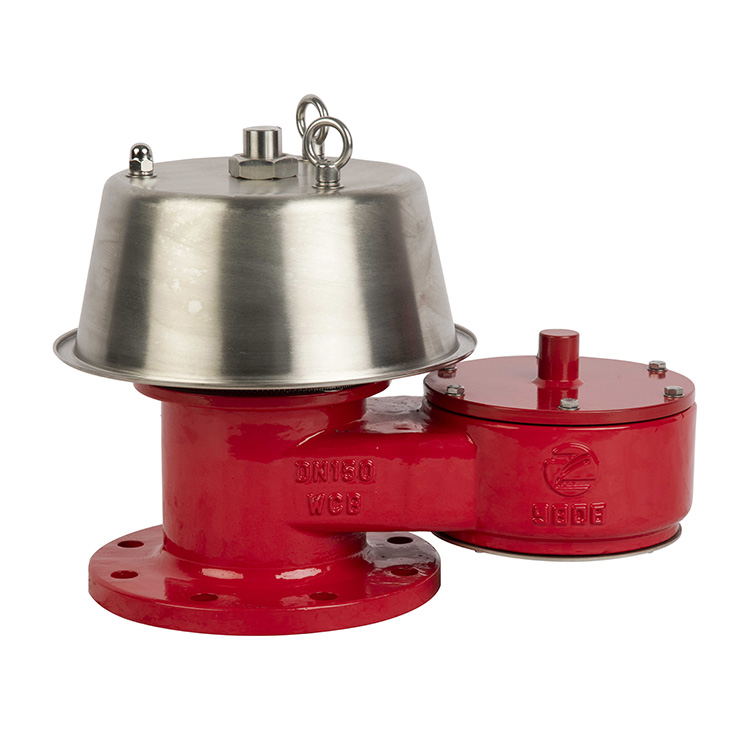
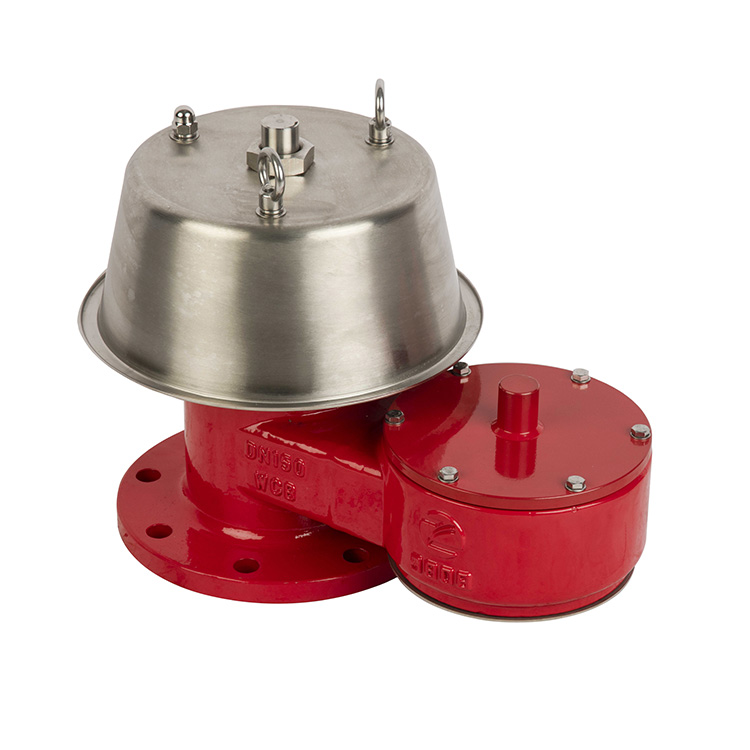
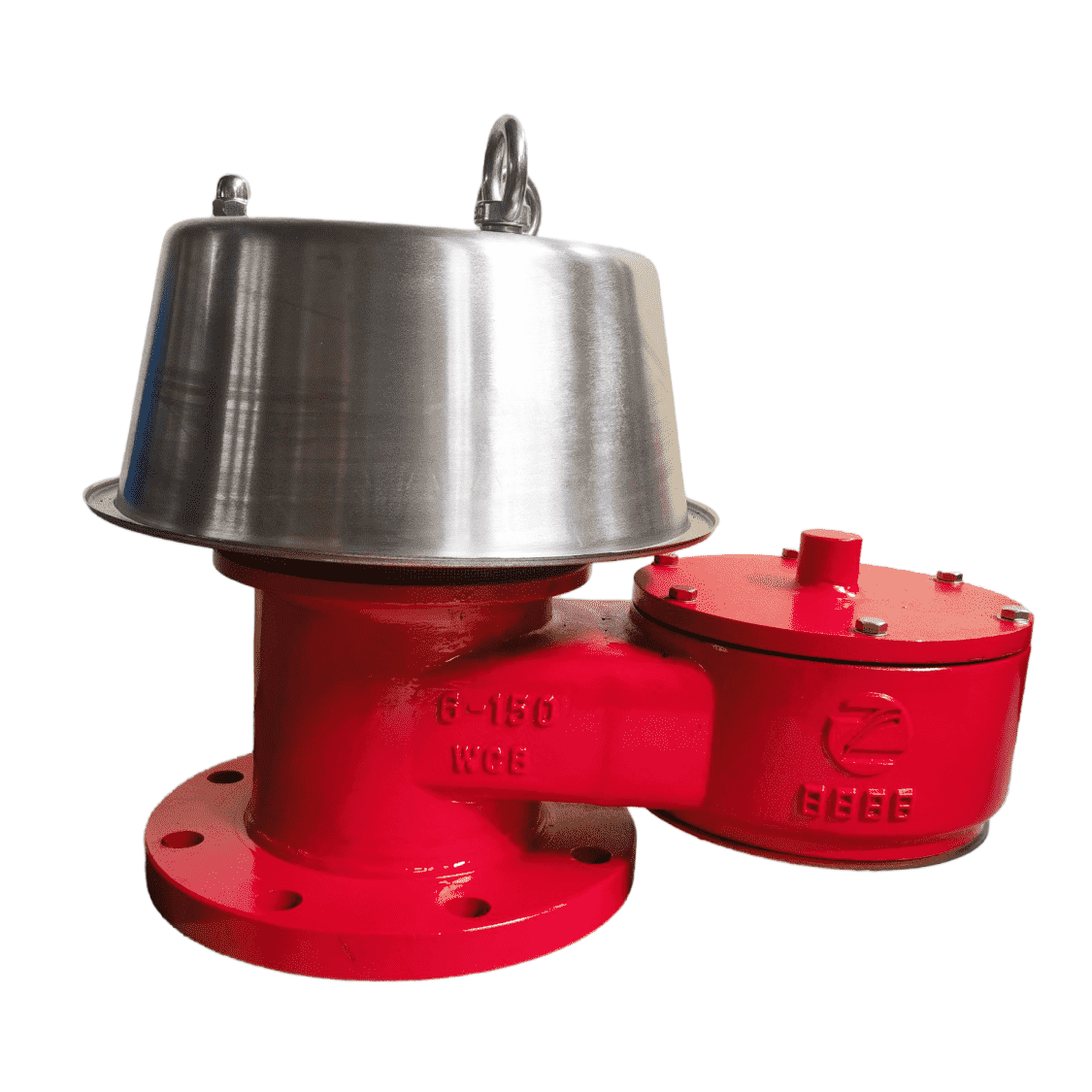
Producdt Description:
ZCPE-pilot operated breather valve with flame arrester is a bit different with breather valve ,first let the seat leakage closer to set point ,second full flow without overpresure ,to maintain the tank pressure balance, reduce safety energy-saving products medium volatile, but also the use of principles of vapor heat transfer, protect the respiratory valve parts is not easy to freeze, the breathing valve to ensure the normal work, equipped with fire retardant explosion-proof function.
Fire breathing valve produced by our company has simplified structure, ventilation volume, less leakage, corrosion resistance, insulationetc.. The valve adopts polytetrafluoroethylene material, has the advantages of low temperature resistant, anti frost. The electrostaticprotection device is provided with a respiratory valve, the valve and the tank to keep the same potential moment.
Operating pressure:
| Type A: | +355pa(+36mmH2O) -295pa(-30mmH2O) |
| Type B: | +980pa(+100mmH2O)-295pa(-30mmH2O) |
| Type C: | +1950pa(+200mmH2O) -295pa(-30mmH2O) |
| Type D: | according to user requirement (special pressure rating) |
| Material: | WCB SS304 SS304L SS316 SS316L |
| Flange Standard: | HG/T20592-2009 ANSI B16.5 HG/T 20615-2009(Class series) HG/T20592-2009 (PN series) ANSI B16.5 AMSE B16.5 |
Note:
Under normal circumstances, (fire) breathing valve operating pressure to B shall prevail;
Applicable materials: gasoline, kerosene, diesel, aromatics, sulfur, air and other petrochemical materials;
Environment temperature: -40 °C -+60 °C;
Shell material: HT, AL, A3, 18-8, 304, 304L, 316, 316L.
Flange standards: HG20592-97 PN1.0 (also can be produced according to user specified criteria)
“Protect Your Infrastructure Today. Request a Technical Quote for ZCBV-I Breathing Valves.”
Common Questions About Tank Pressure Vacuum Relief Valves
Q1: How does a breathing valve protect a storage tank?
A1: The breathing valve prevents the tank from rupturing due to over-pressure when filling or from imploding due to vacuum when emptying, maintaining a safe balance at all times.
Q2: Can the ZCBV-I help in reducing evaporation losses?
A2: Yes. By staying tightly sealed until the set pressure is reached, it keeps valuable vapors inside the tank, which is essential for both VOCs control and economic efficiency.
Q3: What materials are recommended for corrosive chemical tanks?
A3: For aggressive media or coastal environments, we highly recommend our Overall 304 or 316L stainless steel configurations for maximum corrosion resistance.
Q4: Is the ZCBV-I suitable for use with a flame arrester?
A4: Absolutely. For flammable liquid storage, it is often paired with an inline flame arrester or ordered as an integrated unit like the ZCBV-IZ for combined explosion protection.
Q5: How often should a breathing valve be inspected?
A5: We recommend a semi-annual inspection to ensure the valve discs move freely and the gaskets remain in good condition, ensuring the safety of your gauge hatch tank operations.